
The people in those rooms aren't stupid. Most of them care deeply about the business. The problem is that every opinion gets a seat at the table. The founders have a view. Marketing has a view. Sales has a view. Legal definitely has a view. After enough rounds of discussion, the sharp edges begin to disappear. The final result is usually something nobody objects to and nobody remembers.
A polished turd is still a turd.
Nobody ever describes their company as obsessive. Or stubborn. Or occasionally awkward. Nobody says they overthink things, take too long making decisions or care too much about details.
Instead, everybody reaches for the same approved language.

Roddy Doyle once said that the best way to reveal a character is to get them to open their mouths. "I was eighteen and I was in love and I was ugly and I didn't care" tells you almost everything you need to know about a character in a single sentence. The same instinct runs through observations like "He was the sort of fella that if you laughed long enough with him you could get yourself into trouble."

The Commitments, The Snapper and Paddy Clarke Ha Ha Ha are all different books. Different characters. Different stories. Yet they are unmistakably Roddy Doyle. Not because of a particular phrase or a carefully managed tone of voice, but because he keeps returning to the same territory. Ordinary people. Family. Humour. Embarrassment. Pride. Conversations that reveal more than the people having them realise.
Ordinary people. Family. Humour. Embarrassment. Pride. Conversations that reveal more than the people having them realise.
Ben & Jerry's built a reputation talking about issues most food brands would happily avoid. Whether you agreed with them or not was almost beside the point. They stood for something beyond ice cream, which is why the current argument around the brand matters. The Independent reported that Ben Cohen said the company's “voice has been muted” and that its social justice mission had been eroded since the Unilever acquisition. The report also notes that Ben & Jerry's had positioned itself around humanitarian and social values, including LGBTQ+ rights, the climate crisis and war.
That's a part I struggle with.

If a company's values are genuinely part of the business, then selling the business means selling the values too. You can hope the next owner shares them. You can encourage them to protect them. You can even write agreements around them. But ownership is ownership. Once the cheque clears, the decision is no longer yours to make. Although, in fairness, most of us would probably discover a surprising amount of flexibility in our principles if somebody added enough zeros to the end of the cheque.



Rapha found itself facing a different problem. The company spent years helping define a particular image of modern cycling, where the kit often sat closer to fashion than traditional sportswear. BikeRadar reported that, over the last decade, Rapha went from being one of the few brands of its type to one among many, with competition from brands such as MAAP and Pas Normal Studios. CEO Fran Millar put it bluntly: "We are the originals, we started this." In the same interview, she said Rapha had not done a brilliant job of doubling down on what made it different and that doing things the same way as everyone else was never what Rapha was built on.
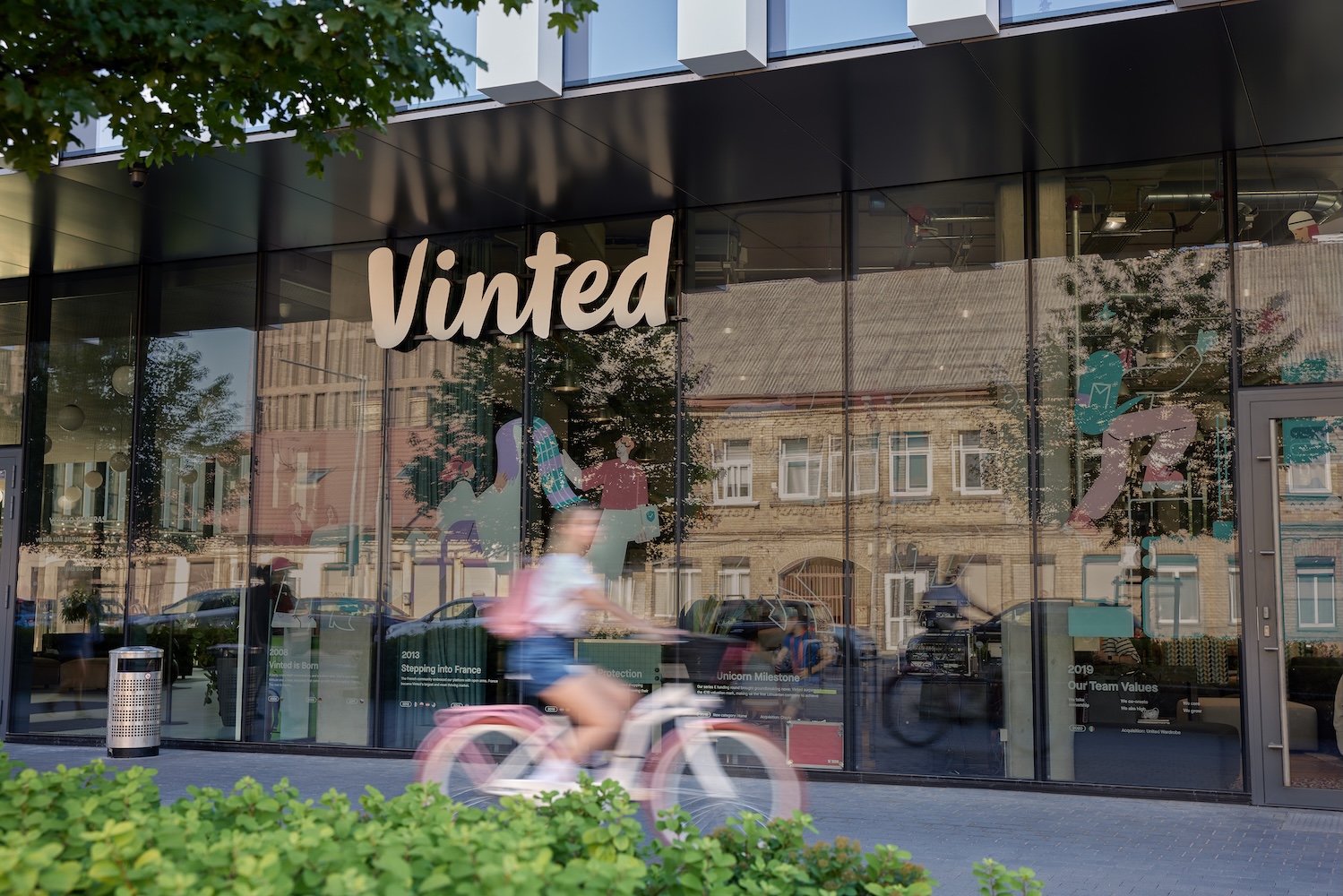
Vinted has spent years talking about giving products a second life. It is a simple idea and a compelling one. It also becomes a lot harder once millions of people arrive. Counterfeits appear. Bad actors appear. Trust becomes a problem that needs solving. Vinted's own authenticity policy says counterfeit items are prohibited, and the UK Intellectual Property Office has worked with Vinted on public guidance to help people spot fake fashion and strengthen trust in second-hand shopping. The idea sounds lovely on a homepage. The real work begins when someone tries to sell a fake handbag.
Spend enough time looking at AI companies and you start seeing the opposite problem. The language starts converging. The logos start converging. The ideas start converging. You've said the word converging too many times in your head. At this point half of them appear to be one gradient away from becoming the same company entirely. The more they converge, the harder they become to tell apart. Recognition disappears. Distinction disappears. Eventually everybody starts sounding clever, innovative and transformative, while nobody sounds particularly memorable.
Some of the logos look suspiciously like puckered anuses, but that's probably another article.



The more I think about it, the less convinced I am that tone of voice has much to do with words. Tone of voice is the visible part of a deeper point of view.
Roddy Doyle keeps returning to ordinary people, ordinary lives and conversations that reveal more than the people having them realise. Ben & Jerry's built a business around the idea that companies should use their influence to speak about social and political issues. Rapha built a culture around the belief that cycling is more than a sport; it's a way of life. Vinted built a platform around the idea that ownership should be temporary and that products deserve more than one life.
The words matter, of course they do, but they tend to arrive afterwards.
Maybe that's why tone of voice documents so often miss the point. They spend their time asking how a company should sound before anyone has decided what the company actually believes.
Meanwhile, somewhere in a meeting room, somebody is writing Friendly, Professional, Approachable, on a whiteboard for the hundredth time.